

People often ask: Do the investing techniques in the book work in China? We don’t know China well so, following the dictum to anchor on what you know, we offer little advice, though we have heard of selected success stories with value investing.
Here is a report on investing in China using a residual income approach. It is quite interesting as it challenges market prices with a no-growth valuation. That was the approach of Benjamin Graham who refused to pay for growth, rather investing in stocks where the price was less than a no-growth valuation. In mature stock markets, such stocks are rare these days so one has to deal with buying growth⸺the key focus of the book. The Chinese stock market has been subject to big swings, potentially with mispricing. Could it be that a no-growth valuation can identify mispricing there? The report suggests so.
In the study, the no-growth valuation is:

 is calculated with forward consensus sell-side analysts’ earnings forecasts provided by Tushare (tushare.pro) which has additional accounting and trading data necessary for the calculation. This value is compared to price in a V/P ratio after each quarterly report date. The strategy then invests in the top 10% of V/P ratios from all Chinese listed stocks for which earnings forecasts are available, equally weighted, with the portfolio rebalanced at each report date.
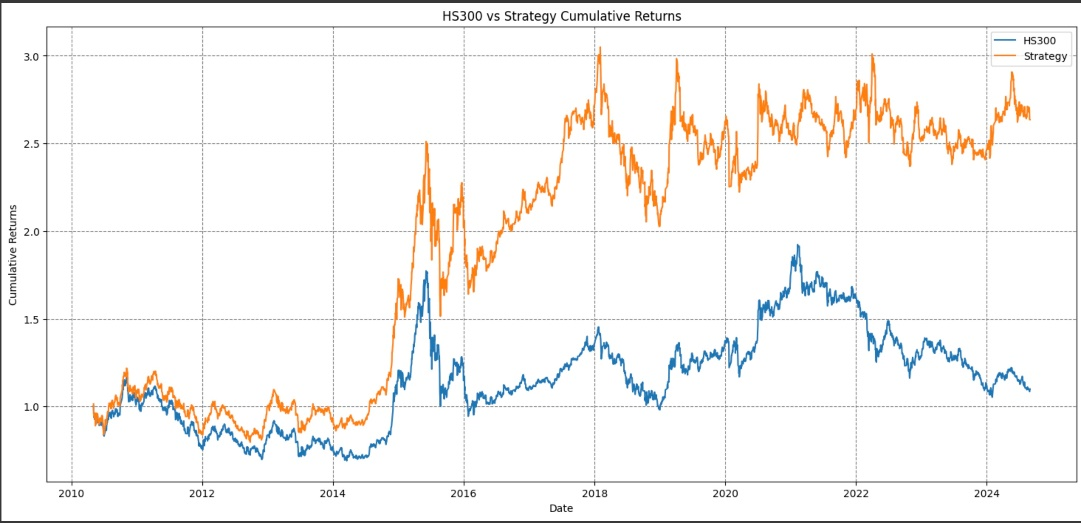
The cumulative returns from this strategy (before transaction costs) from 2010 to mid-2024 are in the figure below. The benchmark return is that for the HS300 index for the largest stocks on Shanghai Stock Exchange and the Shenzhen Stock Exchange.
Source for all exhibits: Yan, Oliver. Does Value Investing Work in China? Masters thesis, Columbia Business School, 2024. With permission.
Here are the calendar-year returns from the strategy compared to the benchmark:
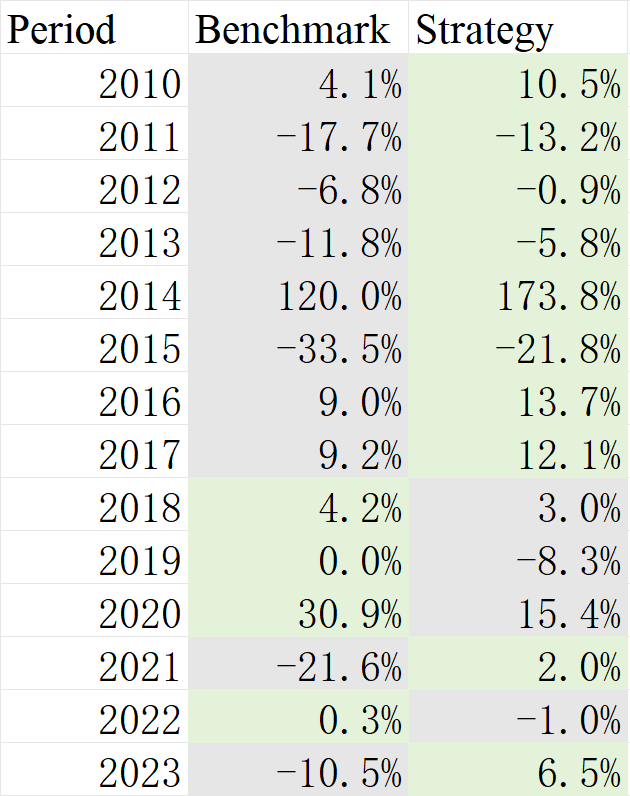
While the strategy beat the benchmark in most years, it did not in the three years, 2018‒2020. 2020 was a bull market, perhaps a period with price momentum where value strategies are typically challenged. However, with the subsequent drop in the market in 2021, the strategy performed relatively well. And the comparative returns in 2014 indicates resilience of the strategy in up markets with the subsequent drop in 2015 less than the market. There was a significant drawdown in 2011 and 2015 but considerably less than that for the benchmark.
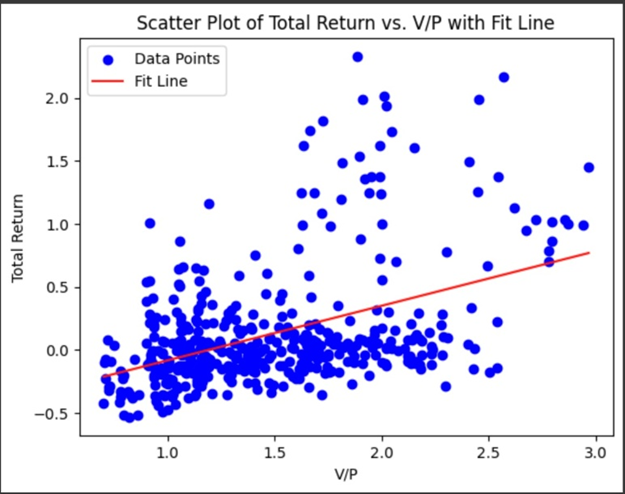
The following plots returns for V/P ratios with a regression line drawn through the observations. For V/P greater than 1.5, there are some very high returns though some with negative returns. This calls for further analysis to sort out these firms.
Value investors invest with are margin of safety, so only invest in stocks with a V/P greater than 1.2 and apply some fundamental features: the firm has positive net income and positive net income growth and exclude small firms with a market cap less than $2 billion RMB. Here are the returns:
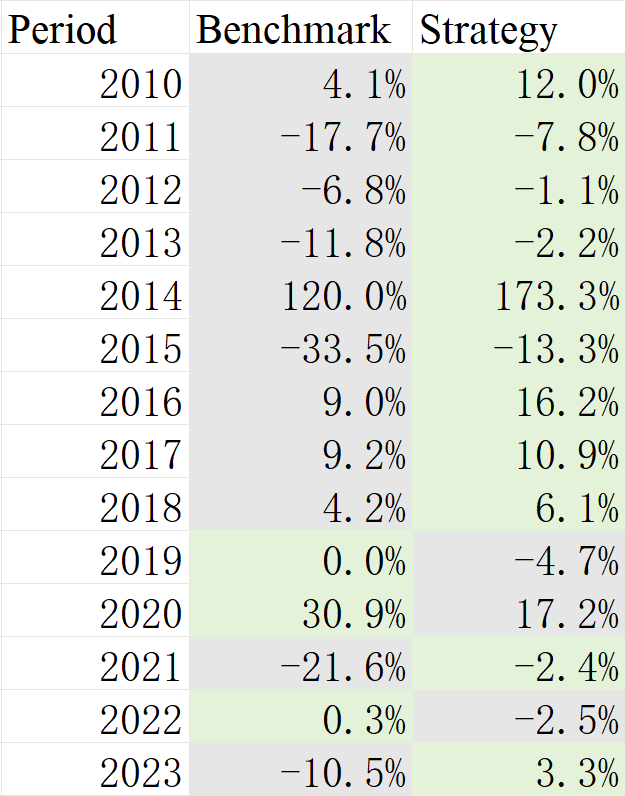
There is some improvement in the returns. This shows promise of improving returns by pressing on further with the fundamental analysis in subsequent chapters.